


Olla de Núria: A legendary route

They say that, for mountaineers, completing the Olla de Núria route is essential due to its spectacular nature and comprehensive path, where hikers and trail runners venture in search of a stimulating experience. Below, we analyze its geographical location, routes, and everything indispensable to carry it out.
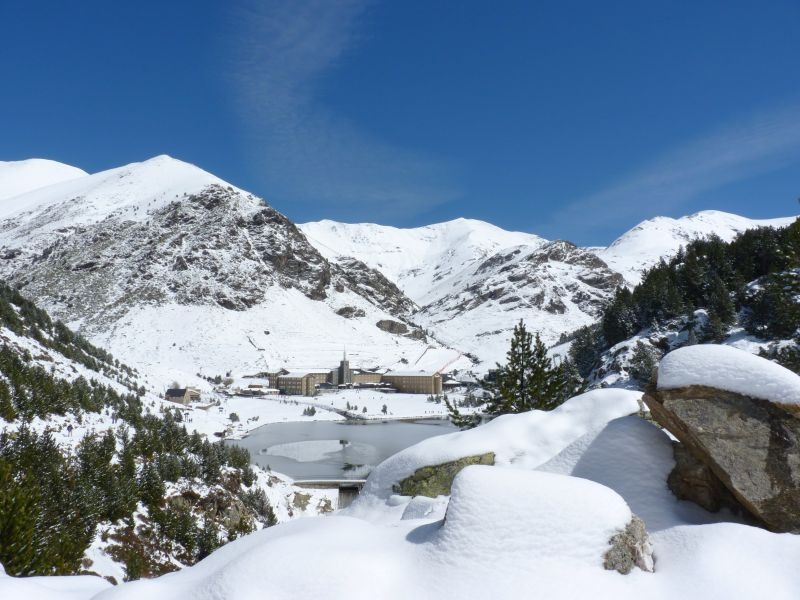
To talk about the Olla de Núria, first of all, we must locate it geographically. And, of course, understand why it’s called an “olla” (pot). This name comes from its U-shape. And where does it start? At the Sanctuary of Núria, located in the Núria Valley. This is where the route begins and ends, consisting of circling the head of the valley by passing over the peaks that form it. It is located in the municipality of Queralbs, in Girona.
Completing the Olla de Núria route is not easy; it requires good physical condition. As mentioned before, the starting point is the Sanctuary, followed by a climb to the summit of Puigmal (2,913 meters). From there, the ridge begins, conquering the various peaks that follow: Segre, Finestrelles, Eina, Noufonts, Noucreus, Fossa del Gegant, Fontnegra and, finally, Àliga, culminating this exciting expedition. To learn more about this attractive mountain journey, we spoke with Mountain Guide Carles Gel and Josep Bisquert, co-director of the Olla de Núria alpine race, which was suspended this year due to the pandemic.
Olla de Núria Route
Carles Gel, Mountain Guide and extensive expert on the area, explains it to us below:
“The Olla de Núria is a giant pot that extends to the west, north, northwest, east, and back to Núria, like the hands of a clock. It is a brutal route. There are 19 peaks, all above 2,700 meters, with Puigmal being the highest point. It is one of the most impressive routes in the Catalan Pyrenees. It is a beautiful route. It is usually done in summer, and there is the famous Olla de Núria race. It is a high-mountain itinerary where you leave Núria towards Collvert. Here you leave the normal Puigmal route and head for the summit of Ras de l’Ortigà. From there, you don’t leave the ridge surrounding Núria until you descend from the Pala peak, reach the hostel, and from the hostel, go down to Núria. For me, the normal time to do the Olla de Núria is no less than 10 to 12 hours.”
Doing the Olla de Núria in virtual format
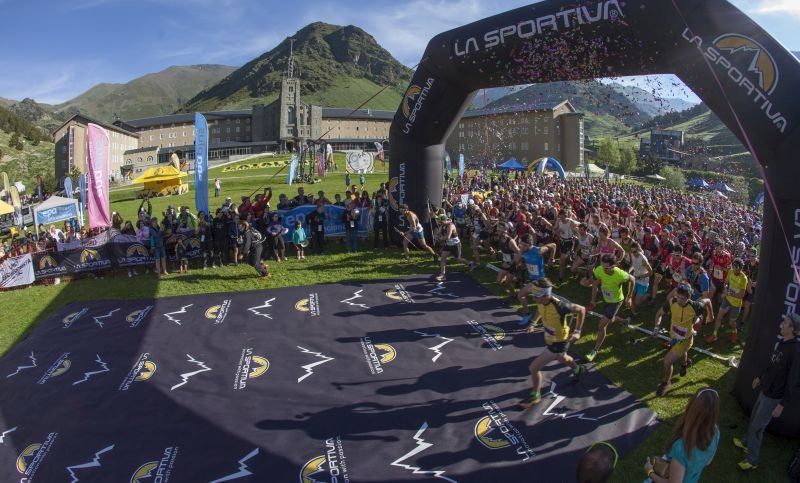
As Carles Gel already mentioned, the Olla de Núria alpine race is held every summer. Organized by the Unió Excursionista Vic, this year, due to the global pandemic, they opted for a virtual race, as other sporting events have done. Josep Bisquert, co-director of this epic trail running race, explains it to us:
“The race features a 21.5km route with 1,950m of positive accumulated elevation gain in the Olla de Núria. It is especially characterized by not touching a single meter of asphalt, as it starts from the Sanctuary of Núria at an altitude of 1,900m; and also, because 72% of the race takes place above 2,700 meters in altitude. With the current situation, we had to suspend the edition scheduled for June this year. Therefore, given the demand from participants and the sadness of not being able to hold it, we had the opportunity to create the Virtual Olla de Núria. Participants had the chance to do the Olla de Núria route for free over the course of 1 month. Once completed and recorded using a GPS watch or any device with a .gpx format (download the Olla de Núria gpx at this link), the file was sent via email to the organization. They then uploaded the result to the LiveTrail platform to create a ranking with all participants.”
You can find the route on the Wikiloc app: the complete Olla de Núria wikiloc.
Why do the Olla de Núria route?
Carles Gel, Mountain Guide: “The prestige, its famous Olla de Núria race… that’s why mountaineers want to do it. Because in one go, you bag almost 20 mountains. Summer is when there’s the most people. In my case, I’ve done it twice in winter, and it’s a route that has its technical sections.”
“Simply, being able to do so many mountains. And the incomparable high-mountain setting, always straddling Catalonia and Upper Cerdanya. That is the greatness of this route, which not everyone is capable of doing, although some people running it usually finish in three hours. However, if you’re going on a hike to the Olla de Núria, prepare for 10-12 hours (as I mentioned before). And if you’re doing it in winter, it’s very tight to do it in one day unless you start at night, reach Puigmal at night, and then continue with the new day ridging along this giant pot that forms Núria, always with the Sanctuary (at 1,964 m) at your feet. It is a magical place where most mountaineers and hikers from the Girona and Barcelona areas got their start.”
Likewise, race participants want to take part for the same reasons: “mountaineers want to traverse the Olla de Núria for its great landscape value, surrounded by unique and highly important peaks, such as the 8 peaks the route passes through, climbing one of the most emblematic, Puigmal, the highest point of the race”, exclaims Josep Bisquert, co-director of the Olla de Núria race.
What do I need to hike the Olla de Núria?
- Water. “You must be prepared and carry at least 2 liters of water, as you won’t find any along the way” (Carles Gel, Mountain Guide).
- If you’re doing it in the middle of summer, it’s best to start very early. Carles Gel recommends staying overnight in Núria and starting around 5:00 or 6:00 in the morning.
- Bring several energy bars, some gels, and a good sandwich, plus candies to always have sugar in your system.
- Equipment: good hiking boots, trousers or leggings, a t-shirt, a Gore-Tex jacket, even a light one (for possible rain), a fleece (essential), a map of the area (even if you have GPS), a compass, good poles, and the typical items you’d take to the mountains in summer.
- If you go in winter: boots, crampons, poles, ice axe, helmet—essentials in your backpack (It’s a “beastly” winter route, as Carles Gel says, since you hit 19 peaks. “And it’s nothing like other crossings”).
- Keep the weather in mind. Get to know the safety apps for high-risk sports.
Hiking the Olla de Núria in the middle of a pandemic?
“Going out to the mountains during this pandemic is good for disconnecting a bit from all the information we’re given. However, from the Olla de Núria organization, we want to remind you that it must be done with sufficient preparation for the activity and knowing the weather you’ll encounter. Rescats have increased since the end of lockdown, and it’s important to know your limits to prevent accidents.”
–Josep Bisquert, co-director of the event organization.-
To comply with the guide and the manual of good practices during the pandemic, before starting the Olla de Núria hike, “we must follow the Covid-19 protocol of the Federació d’Entitats Excursionistes de Catalunya (FEEC) for mountain activities.”
To participate in the Olla de Núria race, it is mandatory to have a current mountain federation license to register. If you don’t have one but want to do a route, you can take out multi-adventure insurance. And if you are a sports event organizer, you can take out your sports insurance online at this link on the Urquia & Bas website.
Gestió Radical
If you want to stay up to date with all our recommendations and activities to do on the Costa Brava, don’t hesitate to sign up for our newsletter and follow us on Facebook and Instagram.